Showing posts with label asia. Show all posts

Sunday, August 01, 2010

Lost in translation


At the 5:30 mark -

CNN host: Jay, you're a wealthy, single guy yet you still live at home with your mum. How come? Doesn't the bachelor life appeal to you? Having your own space?

Jay Chou: I don't think I'll move out. My parents divorced when I was a kid, and I've made up my mind that even if I get married someday, I'll still live with my mum so that I can take care of her and keep her company. I've been having this thought for many years. No matter what happens in the future, I'll live with my mum.

CNN host: [Laughs] You're kidding!

Jay Chou: Yeah, perhaps there are some cultural differences between Chinese and Western people. The Western kids grow up to break away from their families, to become totally independent and make their own lives, but I think Chinese people are very different. We value our roots a lot. No matter how much money you make outside, you still have to go home because we have this duty, this responsibility to take care of our parents. This is the difference I see, at least, from what I know.


I found this part of the interview particularly fascinating. I had a similar conversation with my British friends when I told them that I would live with my parents when I returned to Singapore. In the Western context, living with one's parents post-university comes close to an admission of personal failure - you do so because you cannot make it on your own. It's also seen as a compromise of personal freedom and individuality, signifying a prolonged adolescence and an inability to fully assume the responsibilities of real adulthood. It’s also seen as a failure of parenting, the failure of parents to equip their children to be independent adults. A recent example would be Matthew McConaughey's character in Failure to Launch. The title says it all. As a single man living at home with his parents, he is like a rocket that has failed to launch. In fact, his parents are so desperate to get rid of him that they hire Sarah Jessica Parker's character, a "professional motivator", specifically to achieve just that.

Almost the exact opposite is true in the Asian context. Asian graduates tend to live with their parents until they get married. In fact, parents are often dismayed when their unmarried adult children express a desire to live on their own (if they work in the same city where their parents live). Parents like to be able to provide and care for their children as long as possible, even when they are grown. Family unity is more important than individual liberty, and generally, the most "acceptable" reason for moving out of your parents' home is to start a family of your own.

Instead of individual independence, in the Asian context, being a responsible adult includes caring for your elderly parents. The Confucian ideal of "filial piety", a respect for parents and ancestors, is one of the most important virtues in Chinese culture. The point of view that Jay Chou expresses in this interview is not considered strange, but admirable. Though not all families would choose the same living arrangements, many adult children choose to live near their elderly parents so as to better care for them. There are also attendant benefits for these adult children, such as free child care for grandchildren, which elderly parents/grandparents are more than happy to provide in most instances. This happily symbiotic relationship is openly encouraged by the Singapore government through generous public housing subsidies.

This is not to say that one approach is necessarily better than the other. Each culture tends to be built around a dominant cultural narrative and the potential ill-effects are not hard to see. Excessive individualism can lead to an overly atomised society in which people only care about their own selfish interests, to the detriment of the greater good. Casual viewing of any Chinese TV series based on a large family would sufficiently inform the viewer of the potential pitfalls of exalting the family above all else. These shows are generally peopled by overbearing patriarchs, unreasonable mothers-in-laws and beleaguered adult children.

Different cultures hold up different versions of the good life and so very often, people are driven into the ground chasing after it. Tim Keller points out that the Bible says that all cultures are fallen (because all people are fallen), and that all cultures oppress. Every single culture, puts in front of men and women certain objects and says, "If you don't have them, you're nothing. If you don't have them, you have no worth, no significance. Your existence isn't justified."

Traditional societies tend to make the family unit and the clan into an absolute, ultimate thing. This can lead to honor killings, the treatment of women as chattel, and violence toward gay people. Western, secular cultures make an idol out of individual freedom, and this leads to the breakdown of the family, rampant materialism, careerism, and the idolization of romantic love, physical beauty and profit.

In Ezekiel 14:3, God says about the elders of Israel, "These men have set up their idols in their hearts." ... God was saying that the human heart takes good things like a successful career, love, material possessions, even family, and turns them into ultimate things. Our hearts deify them as the center of our lives, because, we think, they can give us significance and security, safety and fulfillment, if we attain them.


In Romans 1:21-25 St Paul shows that idolatry is not only one sin among many, but what is fundamentally wrong with the human heart:

For although they knew God, they neither glorified him as God nor gave thanks to him... They exchanged the truth of God for a lie, and worshiped and served created things rather than the Creator. (Romans 1:21, 25)

Paul goes on to make a long list of sins that create misery and evil in the world, but they all find their roots in this soil, the inexorable human drive for "god-making." In other words, idolatry is always the reason we ever do anything wrong. No one grasped this better than Martin Luther. In his Larger Catechism (1528) and also his Treatise on Good Works he wrote that the Ten Commandments begin with a commandment against idolatry. Why does this come first in the order? Because, he argued, the fundamental motivation behind law-breaking is idolatry. We never break the other commandments without breaking the first one. Why do we ever fail to love or keep promises or live unselfishly? Of course, the general answer is "because we are weak and sinful", but the specific answer in any actual circumstance is that there is something you feel you must have to be happy, that is more important to your heart than God himself. We would not lie unless first we had made something — human approval, reputation, power over others, financial advantage — more important and valuable to our hearts than the grace and favor of God. The secret to change is always to identify and dismantle the basic idols of the heart.
Tim Keller in Counterfeit Gods,
and How to Find Your Rival Gods

One has only the choice between God and idolatry. If one denies God ... one is worshiping some things of this world in the belief that one sees them only as such, but in fact, though unknown to oneself imagining the attributes of Divinity in them.

Simone Weil

Friday, May 29, 2009

Of fragrant harbours and homesickness

I recently went to Hong Kong for a short break and was taken on a whirlwind tour of the city (courtesy of some wonderfully hospitable friends). I have not been to Hong Kong since I was a child, so in a way, I was discovering the city for the first time. My local friends assure me that plenty has changed since I last visited and from what I can remember from my previous visits, they are entirely right. [Disclaimer: Given the brevity of my stay, all opinions expressed here are impressionistic.]

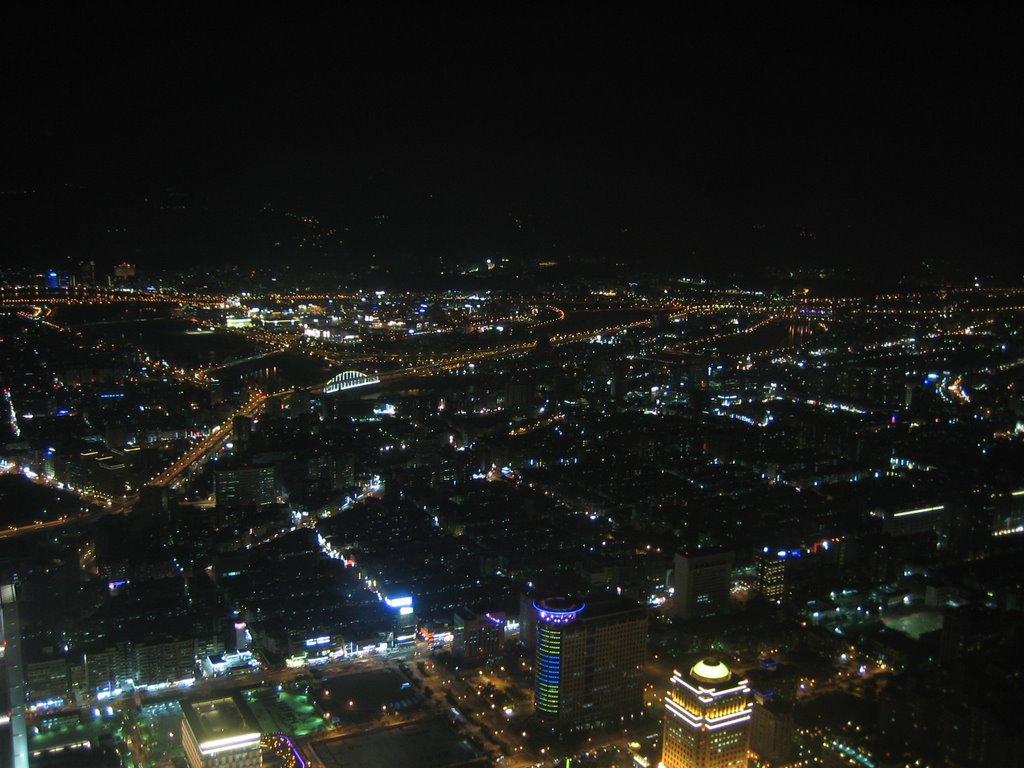
Hong Kong is great fun - good food, vibrant nightlife, fantastic shopping... (Pictures can be found here.) It also has a very dramatic skyline which looks particularly lovely at night. Where Singapore is planned right down to the very last street corner, Hong Kong sprawls out in a more haphazard fashion, no doubt a legacy of the Brits' laissez-faire approach to governance.

I was struck by the many buildings which housed trendy restaurants, bars or boutiques on the first floor, but looked utterly dilapidated from the second floor up. The streets are windy and - for a directionally challenged person such as I - quite confusing. However, their subway system - the MTR - is efficient and has great coverage. Also, I have to agree with my Dad when he says that it is easier to get to the airport via the MTR, as opposed to Singapore's MRT. You can even check in your luggage at the train station. Impressive stuff.

While Hong Kong is a place that I would recommend to anyone for a short holiday, I must confess that it is not somewhere that I would like to stay for any extended period of time. For one thing, my Cantonese is virtually non-existent. I also find the pace of life far too hectic. From chatting with some local friends, the impression that I got was that work is virtually all consuming. Everyone is in a constant struggle to get ahead, because no one - least of all the government - is going to help you. This breeds amazing entrepreneurial spirit on the one hand (out of sheer necessity almost), and an intensely individualistic society on the other. It is no surprise that there are far more wealthy businessmen in Hong Kong than in Singapore.

Food in Hong Kong - especially traditional Cantonese cooking - is sublime, but I still prefer the full variety of Southeast Asian flavours that we have in Singapore. As far as I can tell, Singapore is also more ethnically diverse, which makes for a more interesting city. I also like that the pace of life here is somewhat more laidback and the city more orderly. I also appreciate the fact that the government does try to give its citizens (especially those who are less advantaged) a helping hand wherever possible.

But my fundamental preference for Singapore over Hong Kong may just be a matter of habit and familiarity. After all, both cities have plenty to recommend themselves. At the end of the day, it may simply be a matter of preference. Singapore is not without its problems. While the government provides far more for its people, there is also the danger of Singaporeans becoming overly reliant on the government. Also, how does one plan to have "buzz" in a city?

There is no perfect city. I love coming home after a holiday, but after awhile I long to go away again. While I was abroad at university, I would come down with occasional bouts of homesickness. But now that I've graduated and come home, every now and then I find myself wishing that I could relive my university days. Sometimes it seems that we're constantly in transit. Sometimes it seems that we're just passing through. You never feel like you completely belong somewhere, or anywhere, really. In a way, we are all permanently homesick.

Creatures are not born with desires unless satisfaction for those desires exists. A baby feels hunger: well, there is such a thing as food. A duckling wants to swim: well, there is such a thing as water. Men feel sexual desire: well, there is such a thing as sex. If I find in myself a desire which no experience in this world can satisfy, the most probable explanation is that I was made for another world.
C. S. Lewis in Mere Christianity


I've got my memories
Always inside of me
But I can't go back
Back to how it was

I believe now
I've come too far
No I can't go back
Back to how it was

Created for a place
I've never known

This is home
Now I'm finally
Where I belong
Where I belong
This is home
I've been searching
For a place of my own
Now I've found it
Maybe this is home
This is home

Belief over misery
I've seen the enemy
And I won't go back
Back to how it was

And I got my heart set
On what happens next
I got my eyes wide
It's not over yet
We are miracles
And we're not alone

And now after all my searching
After all my questions
I'm gonna call it home

I got a brand new mindset
I can finally see the sunset
I'm gonna call it home

Now I know
This is home

I've come too far
And I won't go back
This is home

Saturday, April 28, 2007

Of freedom and food

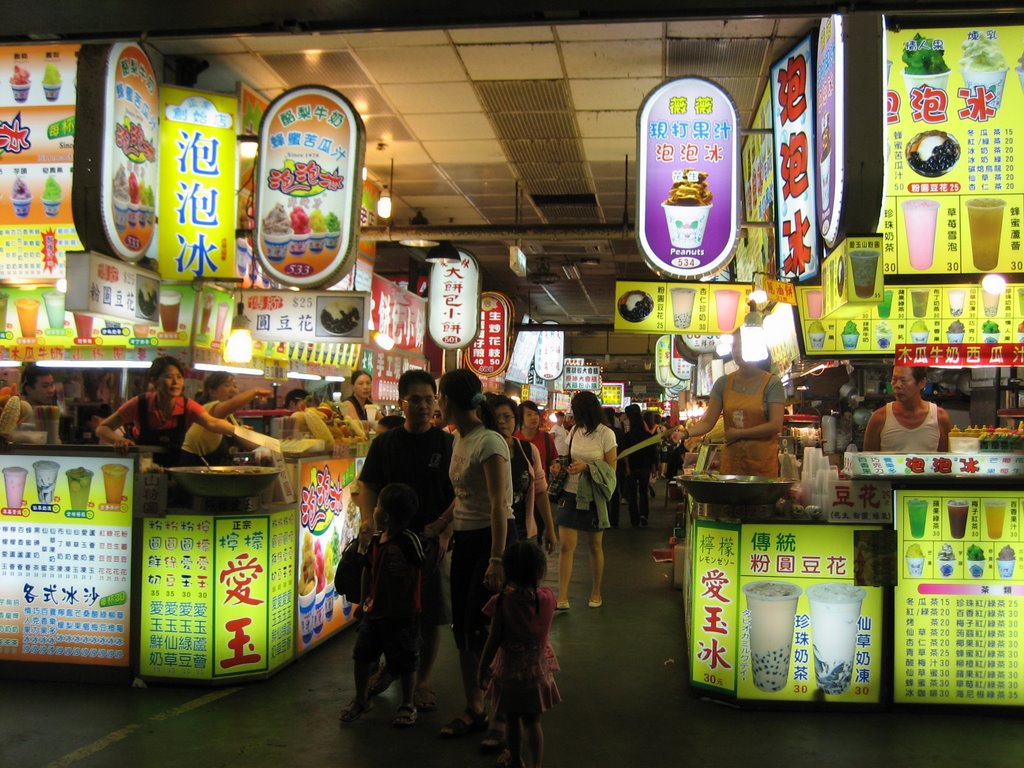
With the recent Singapore Day in New York (talkingcock.com's Top Excuses for NOT Protesting at 'Singapore Day' in New York is pretty funny) , seriouseats.com noted that "According to the late, great [New York Times food critic] Johnny Apple, Singapore has the best street food in the world."

In a September 2003 review, Apple writes:

"FOOD is the purest democracy we have," K. F. Seetoh [of Makansutra fame] said as we dug into breakfast bowls of bak kut teh, a peppery, restorative Teochew soup of pork ribs, mushrooms and kidneys. ''Singaporeans recognize no difference between bone china and melamine.''

Slurp, slurp. Yum, yum. The clear, aromatic broth, full of tender, close-grained pork, perked up by herbs and whole garlic cloves, was cooked in a hole in the wall next to a busy expressway and eaten at a sidewalk table. Cab drivers, teachers and a few junior executives slurped around us. Bak kut teh is the city's preferred hangover remedy, and Ng Ah Sio makes the best, which is why Mr. Seetoh took me there.

He continues:

I THINK the knock on Singapore is way overdone. Sure, it's squeaky clean and modern, but come on: does anyone actually prefer the beggars, rubbish and shantytowns that deface many large Asian cities? Not the poor souls who live in them. It's plenty tough on miscreants, but hardly deserving of William Gibson's woundingly dismissive tag line, "Disneyland With the Death Penalty."

Under Goh Chok Tong, Lee Kwan Yew's successor, individualism has gained a little more breathing room. The longstanding and much-ridiculed ban on chewing gum has just been relaxed. Censorship guidelines are currently under high-level review. Nightclubs, once invisible, now throb into the wee hours. And the louchest of Maugham's or Conrad's characters would feel right at home in the seedy bars and brothels off Geylang Road, east of the city center.

Singapore: A Repressed City-State? Not in Its Kitchens was the last article that was published in the New York Times while Apple was still alive. In it he writes:

With the country’s basic manufacturing jobs shifting to China, the younger Mr. Lee wants to turn the painfully strait-laced Singapore into a relaxed, appealing target for tourists. The primary lure will be a $3 billion resort and casino ...It will offer not only extensive facilities for gambling, an activity dear to Chinese hearts, but also, like Las Vegas, a wide array of top-end dining spots, in a nation where good eating is a national pastime.

But Singapore already has gastronomic attractions aplenty. Start with its unmatched street food — chili crabs and chicken rice, laksa and satay and fish head curry — served in hundreds of hawkers’ stalls. Fast, cheap and delicious, its hygiene is certified by the ever-vigilant Ministry of the Environment and Water Resources.

As a friend pointed out rather humorously - who needs freedom when you have food?

Thursday, October 26, 2006

Driving in Taiwan


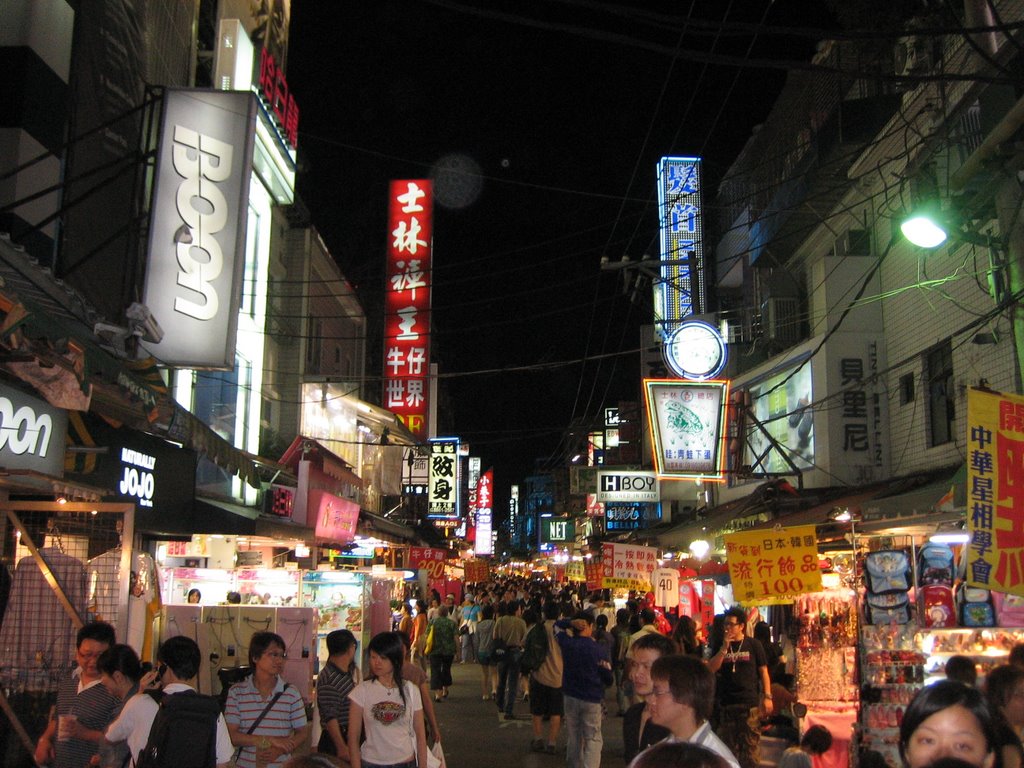
Last week we went on a field trip to Taiwan as part of our foundation course, and one of the Singaporeans we met there told us that many Singaporeans find Taiwan messy and disorderly. He said that you can tell the difference between Singaporean and Taiwanese culture just by looking at the way people drive. In Taiwan, cars swerve in and out of lanes and traffic lights are more like suggestions rather than legal requirements. The Taiwanese have this proverb that means "order in disorder", and they are very tolerant of inconsiderate driving. If you pull up alongside the road to let people off, causing a backlog of cars behind you, people will just wait because everyone recognises that they would have done exactly the same had they been in your position. But if you did that in Singapore, the drivers stuck behind you would be pounding on their horns.

We Singaporeans are a very law abiding lot, but we are extremely intolerant of people who do not obey what we perceive to be the rules. At the same time however, the Taiwanese are also extremely intolerant of intolerant people. Quite of few of them see Singapore as inflexible and authoritarian, and China is regarded as the antithesis of democracy and a system that just cannot be accepted.

I was keenly reminded of how Tim Keller once pointed out that all cultures are oppressive - they set up an ideal (say, of law-abidingness or liberal tolerance) and everyone who does not conform is "condemned". The Bible tells us that all cultures are fallen (because all people are fallen), and that all cultures oppress, because every single culture puts in front of people certain objects and says “If you don’t have them, you’re nothing.”

Ancient cultures, and traditional cultures today, tend to have collectivistic idols: Follow the rules! Obey the law! Toe the line! But modern Western cultures tend more to have individualistic idols: Break free! Define yourself! It’s your choice, so choose! Every culture that ever existed and that exists today, is telling you to build your identity on something.

One of the teachers of the law came and heard them debating. Noticing that Jesus had given them a good answer, he asked him, "Of all the commandments, which is the most important?"

"The most important one," answered Jesus, "is this: 'Hear, O Israel, the Lord our God, the Lord is one. Love the Lord your God with all your heart and with all your soul and with all your mind and with all your strength.' The second is this: 'Love your neighbor as yourself.' There is no commandment greater than these."
Mark 12:28-31

It is no accident that Jesus tells us to love our God with all our heart, soul, mind and strength first, before telling us to love our neighbours, because the latter would be completely impossible without the former.

It is impossible to love your illiberal neighbour just as much as your avowedly liberal self, if you do not love God more than your liberal credentials.

If you build your identity on being liberal, you will despise illiberal people. If you build your identity on being law-abiding, you will despise "law-breakers". Only if you build your identity on God, a God who loves you with an everlasting love despite your weaknesses and flaws, a God who will tear himself apart to make you whole, will you be completely incapable of despising anyone.